
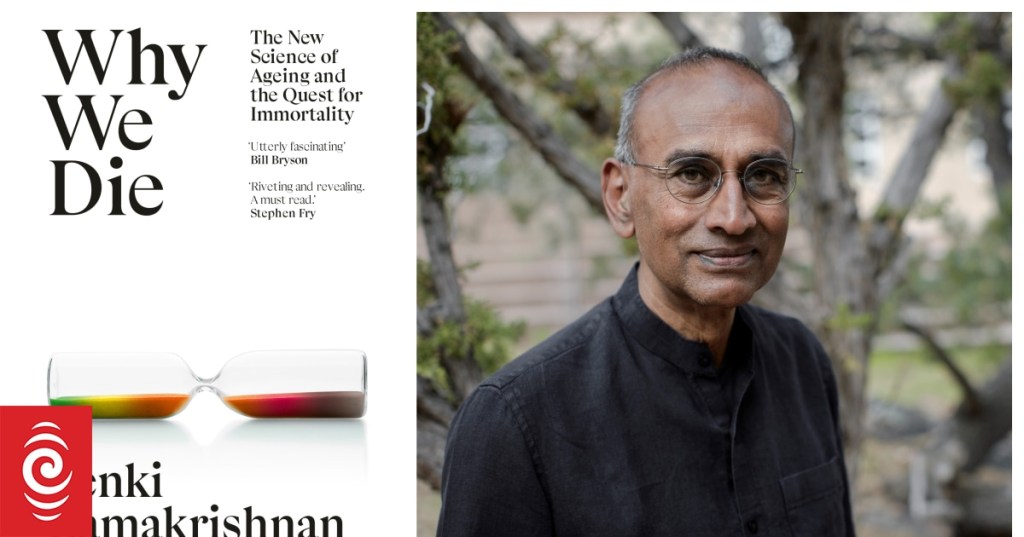
What is it about?
In Why We Die, Nobel laureate Venki Ramakrishnan attempts to give a unified scientific account of ageing — how cells fail, how systems deteriorate, how evolution shaped the limits of lifespan, and why interventions that sound promising often falter. The book sits at the intersection of molecular biology, evolutionary logic, and medical research, and Ramakrishnan’s ambition is to make a deeply complex field readable without flattening it. Today, there are more than 700 biotech companies focused on aging and longevity with the combined market cap of at least $30 billion.With all this investment in hype in the anti-aging industry, it can be difficult to figure out what’s really going on. Many of the top distinguished scientists in the field now have financial stakes in these companies.
The book gives you a robust framework for why ageing is not a glitch but a programmed evolutionary trade-off. Infact, Venki Ramakrishnan has often said that he wrote this book book to give people an understanding of the fundamental principles so that when they come across the next big discovery or read about something in some magazine or newspaper or listen to it on a podcast, they can connect it with what they know about what’s going on in ourselves.
What really works!
Positives
The clarity of intention is the book’s strength. Ramakrishnan doesn’t chase hype or pander to the “longevity industry” optimism. He is measured, often sceptical, and always attentive to evidence. The historical sections — how scientists arrived at certain theories, why some ideas died, how others survived — are especially good. He also situates ageing within evolution without reducing it to fatalism. For a subject that attracts pseudoscience, this book is refreshingly grounded.
Venki’s core idea is that Biology has a bias. Its main selection is for making sure that the genes we have are passed on. So it’s about the survival of our genes. It doesn’t much care what happens later on in life. At the end of the book, after being taken throughout all the causes of aging, there’s always this delicate balance between what’s good for you early in life and what causes aging later. And if you start tinkering with one, you might affect the other.
What might not work
When Ramakrishnan moves deep into molecular mechanisms or into the technical limitations of interventions, the book occasionally outruns an intelligent general reader. Some chapters compress too much information to remain fully digestible. The argument stays clear, but a portion of the detail might seem like it is “specialist-only,” and you feel it after the book, when you try listing out everything you read in your head. But never does he let the emotional and philosophical stakes of ageing be overshadowed by biochemistry.
Why You Should Read It
Read it if you want an honest, scientifically rigorous map of what ageing research can and cannot do. The book resets expectations: there are no miracle cures, no science fiction fantasies. What we have in front of us is just the slow, evidence-led struggle to understand something fundamental about our biology. Even if parts feel dense, the core insights stay with you.
And finally Venki boils the book down to the common sense of trio of healthy living which actually helps to slow down ageing: and you can do it yourself, with effects better than any anti-aging medicine on the market. A moderate and healthy diet, including lots of fruits and vegetables. Exercise -induces reaction that helps us repair damage. It even helps with regenerating our mitochondria. And Sleep. And actually meet more people-socializing, having friendships, etc. The book gives reasons based on the Nobel Laureate’s deep understanding of molecular science as to why these simple steps are so effective.
Definitely Why We Die is the sort of book that sharpens your reading of popular science and immunises you against longevity propaganda.
 Babel School of Languages