
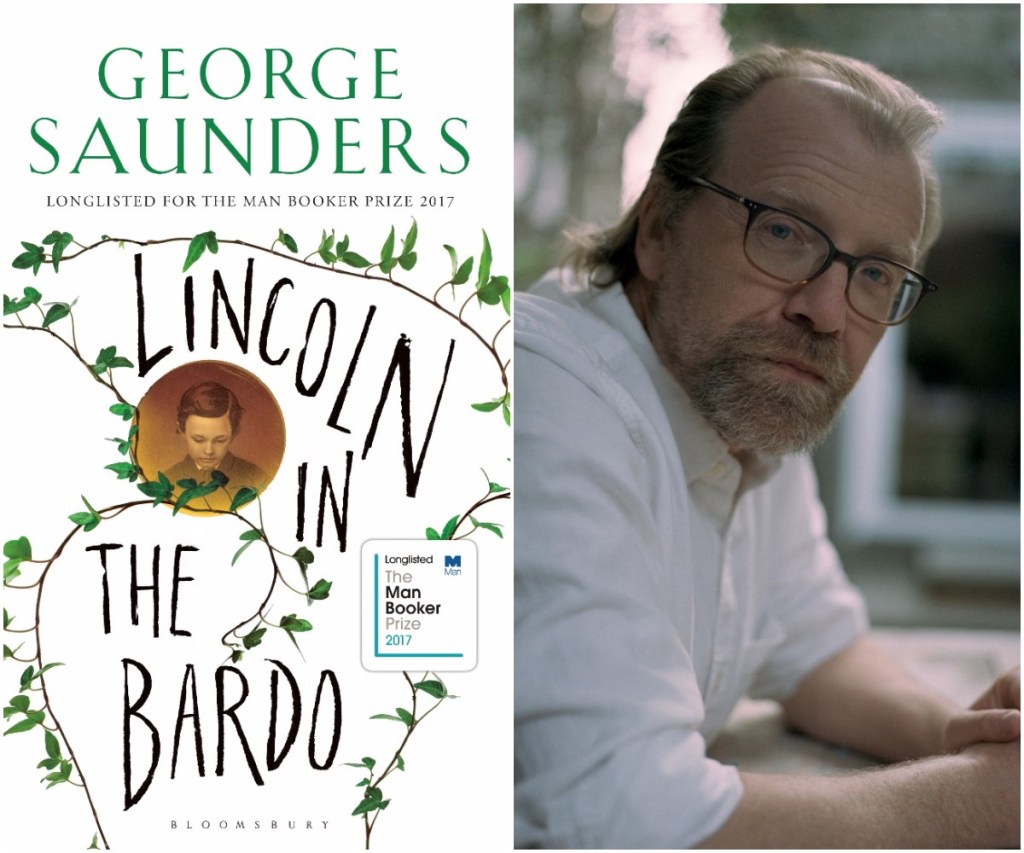
What is it about?
Saunders’ novel won the Booker Prize in 2017. Being primarily a short story writer- this was Saunder’s first full length novel- and it is structurally bold. Lincoln in the Bardo is a collage of voices, fragments, quotations (real and fabricated), all orbiting the moment of Abraham Lincoln’s grief over his son’s death. The book sits somewhere between historical reconstruction, ghost story, and experimental theatre. Its design is deliberate — Saunders wants form to mirror feeling, and the disorientation of the structure matches the confusion of the dead who narrate much of the book. For a reader outside the American historical and cultural frame, the emotional immediacy of the Civil War mythology may not fully land, but the craft is undeniable. It is a novel that builds its world through voices rather than plot, and once you settle into that rhythm, it becomes unputdownably absorbing.
What we loved!
The formal invention works like magic. Saunders commits to the fragmented polyphonic structure without using it as a gimmick. Some of the voices are sharply funny, others unexpectedly tender, and the shifting viewpoints keep the novel alive even when very little “happens.” But how much can happen when you are dead anyways right?The portrayal of Lincoln — seen only through others — is intelligent: restrained, almost blurred, letting the reader feel his grief without sentimentality. The book aims for a kind of momentum through accumulation rather than narrative drive. And that is an acutely pleasurable, even fresh, reading experience.
What might not work.
In some way, the emotional stakes depend heavily on American historical memory, and if you’re not embedded in that mythos, a little of the book stays at a distance. The supernatural frame for some can feel stretched; some sections repeat tonal effects you’ve already absorbed. But it is the Bardo, after all, and these quirks contribute to the feeling of eternity, when you are stuck in the Limbo. The final emotional beats land too quickly, more as formal requirements than natural developments. But there is much that is memorable and infact, fun, that we are ready to forgive these small hiccups.
Why you should read it
Read it for the experiment that actually works. Saunders takes a risk with structure and pulls it off like the master he is. If you’re interested in how form can shape meaning, the novel is definitely worth your time. It’s inventive without being pretentious, humane without drowning in sentiment, and playful even when dealing with grief. You won’t necessarily be shaken by it unless the American Civil War is part of your imaginative landscape, but you will come away terribly impressed by the control and originality of the writing.
Score: 8.9

