
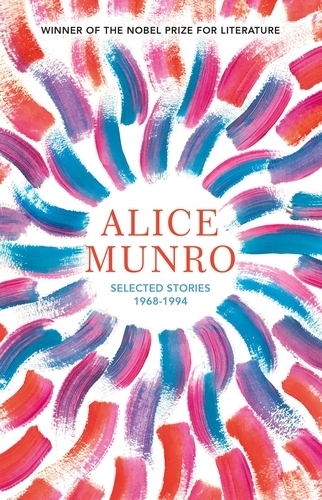
What is it about?
Written by the Nobel Laureate at the first of her career- Selected Short Stories offers us some of the best, most touching and powerful short stories ever written.
Reading Munro is like watching the finest and subtlest of surgeons take ordinary lives apart with absolute precision. There is no performance, no stylistic acrobatics, no attempt to impress. What she does instead is far more difficult: she reconstructs how people actually live and think — the half-decisions, the concealed motives, the impulses we always forget to admit even to ourselves. This selection shows the full span of her technique. She moves across decades in a single sentence and then lingers on a moment that appears trivial but changes the trajectory of a life.
What makes Munro remarkable is her refusal to turn experience into a moral or a lesson. She does not tidy anything. People behave well, badly, inexplicably, generously — often in the same paragraph. The stories work because they respect the complexity of human intention without decorating it. You can read them as psychological studies, as social documents, or simply as supreme exercises in narrative control.
It is easy to see why Munro is placed beside Chekhov. She doesn’t do “big ideas.” She does accuracy — emotional, temporal, behavioural — and she does it with an authority that looks effortless until you try to imagine writing even one page this cleanly.
What we absolutely loved!
The greatest strength of this selection is the range. You see Munro at different stages, but the consistency is astonishing: the temporal leaps, the sudden reframing of a character’s past, the quiet insertion of information that forces you to reinterpret the entire story. Her sense of proportion is unmatched — she knows exactly how much to say and when to stop. The characters feel fully lived in, not because Munro describes them at length, but because she understands how memory works: discontinuous, biased, unreliable, yet persuasive. Several stories achieve something very few writers manage — you finish them and immediately pause to reflect- for quite a while (trust us). You will catch yourself rethinking your own assumptions about relationships, family, love, ambition and pretty much every life decision.
If you really want to nitpick…
There is nothing really to. What can you do when in front of a masterwork but to leave it moved profoundly and awestruck? If there is a limitation, it is one intrinsic to Munro’s method. She is not interested in structural daring or conceptual experimentation. Readers looking for formal risk-taking might think she is too simple. Thereby missing the point, maybe.
These are minor issues, more a description of preference than a true flaw. Within her chosen mode, she is almost unbeatable.
Why You Should Read This
Read this if you want to see how narrative intelligence works without spectacle. Munro shows how much fiction can achieve with control rather than invention: the right detail, placed at the right time, can change the emotional weight of an entire story. Her work is a masterclass in perspective — how the same event looks different when remembered, misremembered, or reluctantly admitted. She demonstrates that psychological depth does not require ornate language; it requires clarity and attention. This volume is the best possible introduction to her craft and a reminder that short fiction, at its highest level, can do more in twenty pages than most novels do in three hundred.
Score: 10 / 10
 Babel School of Languages