
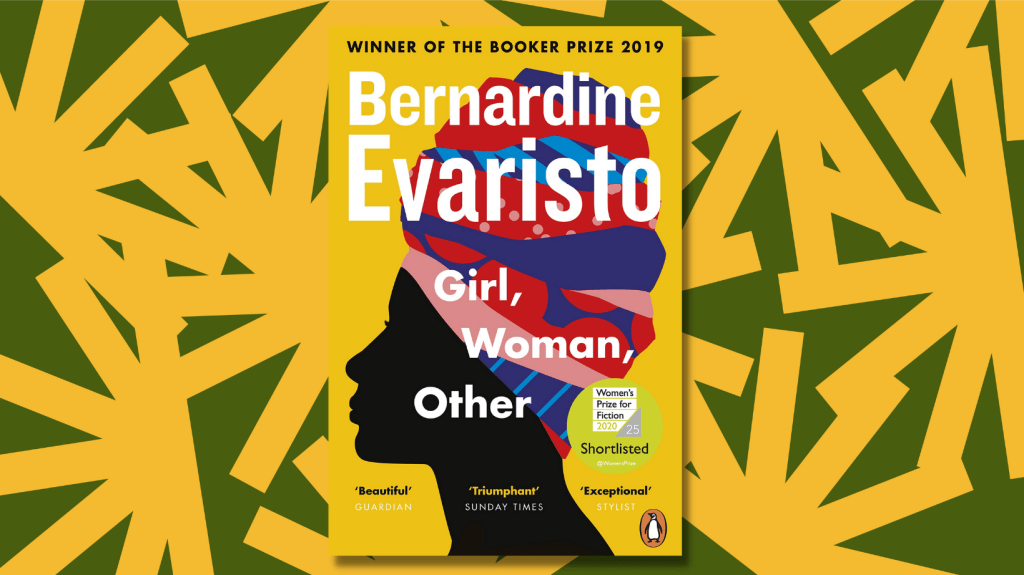
What is it about?
Girl, Woman, Other is one of those rare novels that manages to feel both exuberantly free and carefully engineered. Bernardine Evaristo builds a chorus of twelve interconnected voices — Black British women, queer women, migrants, mothers, daughters, teachers, performers — and lets them move through London with a rhythm closer to spoken-word poetry than to traditional prose. The absence of rigid punctuation and the fluidity of line breaks are not gimmicks; they are precisely the point Evaristo is making: that identity is unstable, communal, constantly in motion.
Reading the novel is maybe the closest, one can get to experiencing the sensation of being pulled into multiple orbits at once. The book is memorable and exciting in the way a well-constructed mosaic is fun — every new tile deepens the whole. You don’t just follow individual arcs; you feel the architecture of the novel assembling itself as you move through it. And because the narrative insists on multiplicity rather than hierarchy, it resists being turned into a single moral or political statement. It is instead a celebration of contradiction, of flawed and brilliant women who are allowed to be angry, joyful, self-involved, uncertain, tender, and occasionally hypocritical.
Evaristo’s achievement is not simply thematic; it’s technical. She makes a polyphonic novel feel light on its feet, even when the core theme is pretty heavy terrain.
What we liked about it!
The greatest pleasure here is the sheer energy. Evaristo’s voice bursts with movement – she lets the poet and dramatist in her go wild. It is obvious not only in the free-flowing form, but in the emotional agility of each character. The novel’s intersecting structure never feels like a trick; instead, it offers a democratic sense of seeing from many angles at once. Amma, Yazz, Dominique, Carole, Shirley, Hattie… every voice arrives with its own cadence and worldview, and the overlaps are where the book truly sings. Evaristo more or less succeeds in depicting social context without turning characters into case studies. London becomes a living fabric rather than a backdrop. And throughout, the novel stays accessible and playful — even its most political moments feel grounded in lived experience rather than manifesto-writing. It’s a novel that respects complexity but refuses heaviness.
What could be better?
Difficult though it is to find flaws in a Booker winner and a much loved bestseller, the ambition occasionally exceeds the emotional depth of individual arcs. Some characters feel sketched rather than fully inhabited, but we guess that is unavoidable in a book with such a large cast. The speed of the form sometimes pushes past nuance, especially in the later chapters where revelations accumulate quickly. And well, in a book with a theme as obvious as this (which it wears proudly on sleeve and headgear)it can feel slightly engineered to produce thematic coherence. None of this undermines the novel, but it keeps it from reaching the sharper, more devastating emotional register that it comes so close to.
Why you should read it
Read Girl, Woman, Other if you want a novel that breaks rules without announcing itself as experimental. It’s ideal for readers who love character-driven storytelling but are hungry for fresher structures and voices. The book offers a rare sense of generosity — an invitation to inhabit multiple lives without judgement. For anyone interested in contemporary Britain, feminist writing, queer histories, or the aesthetics of polyphony, this is essential reading. But even beyond its sociopolitical relevance, it’s genuinely enjoyable: quick, warm, witty, full of narrative delight. If you want a book that leaves you with characters you remember long after the final page, Girl, Woman, Other delivers with confidence.
Score: 8.95 / 10
 Babel School of Languages